
Washington State Gas & Fuel Taxes:
How 2022 Compares to 2026 (And Why Prices Feel So Much Higher)
If you drive in Washington State, you’ve probably noticed something frustrating: even when national fuel prices fall, Washington’s prices stay stubbornly high.
The reason isn’t just oil markets or refineries—it’s policy. Between 2022 and 2026, Washington significantly changed how fuel is taxed and regulated, layering new costs on top of traditional gas taxes.
Here it is in plain English:
- What Washington’s actual fuel tax rates were in 2022 vs. 2026
- What changed (and what didn’t)
- Why today’s pump prices feel dramatically higher than just a few years ago
First, a Quick Clarification: Taxes vs. Policy Costs
Before looking at numbers, it’s important to understand that not all fuel costs are legally “taxes.”
There are two different categories that affect what you pay at the pump:
- Statutory fuel taxes
- Set in law
- Charged per gallon
- Go to transportation funds
(This is the traditional “gas tax” most people think of.)
- Climate policy costs
- Created by state programs
- Charged to fuel suppliers, then passed to consumers
- Not labeled as taxes, but function like them in practice
Washington Fuel Tax Rates: 2022 vs. 2026
Statutory Fuel Taxes Only
(State + Federal excise taxes, cents per gallon)
| Fuel Type | 2022 WA State Tax | 2022 Federal Tax | 2022 Total | 2026 WA State Tax | 2026 Federal Tax | 2026 Total |
|---|---|---|---|---|---|---|
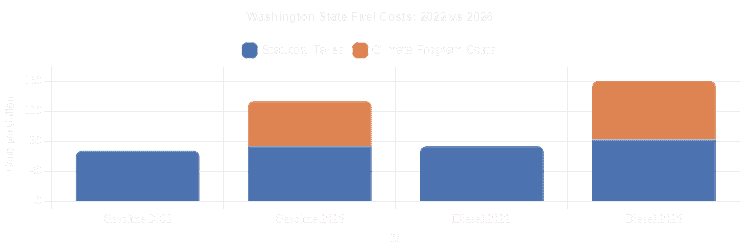
| Gasoline | 49.4¢ | 18.4¢ | 67.8¢ | 55.4¢ | 18.4¢ | 73.8¢ |
| Diesel | 49.4¢ | 24.4¢ | 73.8¢ | 58.4¢ | 24.4¢ | 82.8¢ |
[krem.com], [washingtonpolicy.org]
What Changed Between 2022 and 2026?
✅ State fuel taxes increased
- Gasoline: +6.0¢ per gallon
- Diesel: +9.0¢ per gallon
These increases took effect July 1, 2025, ending nearly a decade with no gas‑tax hikes in Washington. Starting in 2026, gasoline taxes are also indexed to inflation, rising about 1¢ per year automatically. [washingtonpolicy.org]
❌ IMPORTANT: Federal fuel taxes did not change
- Federal gas tax: 18.4¢ per gallon
- Federal diesel tax: 24.4¢ per gallon
- Federal fuel tax rates have been unchanged since 1993. [krem.com]
Why Prices Rose So Much More Than These Numbers Suggest
If state fuel taxes only rose by a few cents, why does it feel like prices jumped by much more?
The answer is new climate‑related fuel charges that did not exist in 2022.
Climate Commitment Act (Cap‑and‑Invest)
Washington’s Climate Commitment Act (CCA) took effect in 2023. It requires fuel suppliers to buy carbon allowances at quarterly auctions. Those costs are then passed directly to consumers.
Estimated current impact (2026):
- Gasoline: ~50–52¢ per gallon
- Diesel: ~63–66¢ per gallon
These amounts fluctuate based on carbon auction prices but now represent one of the largest cost components in Washington fuel prices. [wsdot.wa.gov], [wspa.org]
Importantly:
- This additional WA State gas/fuel cost did not exist in 2022
- It does not fund roads – it goes into 3 accounts
- Climate Investment Account
- Air Quality and Health Disparities Improvement Account
- Carbon Emissions Reduction Account
- It is not shown as a separate line item on receipts – You are expected to pay it and not notice
Clean Fuel Standard (Low‑Carbon Fuel Program)
But wait, there’s more: WA State also launched a Clean Fuel Standard (CFS) in 2023, modeled after California and Oregon. It requires fuel suppliers to reduce carbon intensity or purchase credits from cleaner fuel producers.
Estimated current impact:
- Gasoline: ~5–15¢ per gallon
- Diesel: ~5–20¢ per gallon
These costs ($$$) are expected to increase over time as carbon‑reduction targets become stricter. [oilpriceapi.com]
Putting It All Together: Real‑World Pump Impact (2026)
When you combine everything WA State drivers pay because of government policy:
| Fuel Type | Statutory Taxes | Climate Programs | Total Government Cost |
|---|---|---|---|
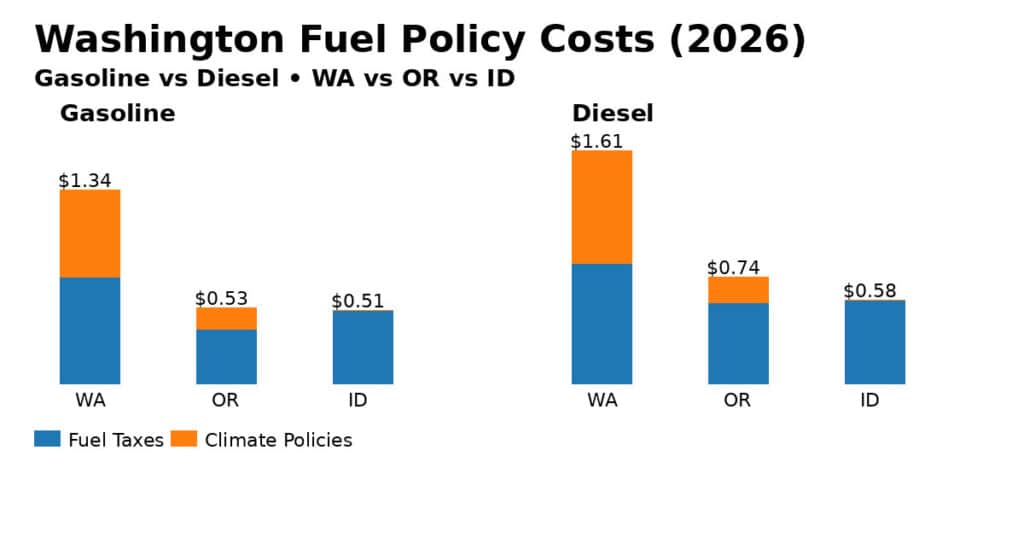
| Gasoline | 73.8¢ | ~55–65¢ | ~$1.30–$1.40 / gal |
| Diesel | 82.8¢ | ~70–85¢ | ~$1.55–$1.70 / gal |
[krem.com], [wsdot.wa.gov], [oilpriceapi.com]
That means over $1.30 per gallon of the cost of gas/diesel fuel in WA State is now driven by state taxes and state policy… that is before oil prices, refining costs, or station markups are even considered.
The Bottom Line
- Between 2022 and 2026, WA State’s statutory fuel taxes increased
- The much larger gas/diesel price jump came from new climate programs layered on top
- These added costs explain why WA State routinely ranks among the most expensive states for fuel, even when national prices fall
Whether you support or oppose these policies, understanding the breakdown matters—because without it, Washington drivers are left wondering why prices never seem to come back down.